
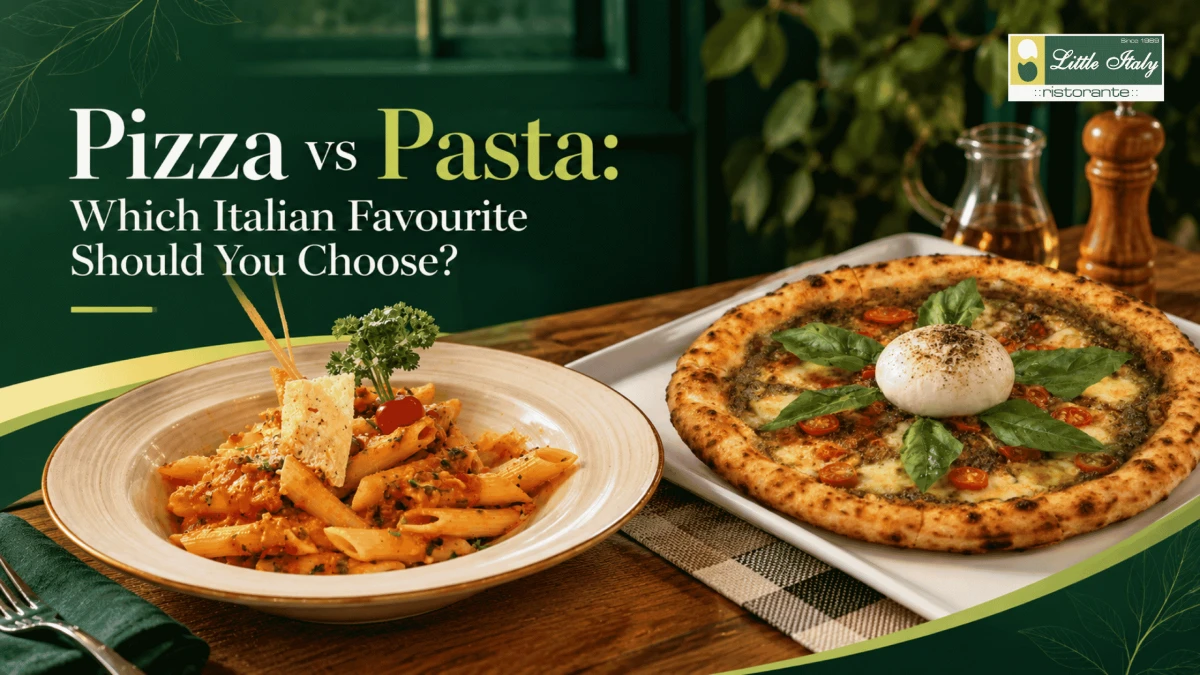
Choosing between pizza and pasta depends on more than taste. You may be thinking about calories, carbohydrates, your appetite or the occasion. There is no single answer for everyone, but understanding the differences can help you choose.
What Makes Pizza and Pasta Different?
Pizza and pasta are both popular Italian dishes, but they have different foundations. Pizza is built on a dough base. The base is shaped, covered with sauce and other ingredients, then baked. Pasta is made in different shapes and is usually cooked in water before being served with a sauce.
This difference affects how each dish is eaten. Pizza is often served in slices, making it easy to share. Each bite brings together the base and whatever is placed on top. The crust may be thin and crisp or thicker and softer, depending on the style.
Pasta is usually served as an individual portion. Its shape can change the feel of the dish. Long strands such as spaghetti are easy to twirl around a fork, while short shapes such as penne have a different bite. The sauce is often mixed through the pasta, so the two are enjoyed together.
Here is a simple comparison of the two dishes:
| Feature | Pizza | Pasta |
| Main component | Dough base | Pasta |
| Cooking method | Usually baked | Usually boiled |
| Serving style | Slices or whole pizza | Usually an individual portion |
| Texture | Crisp, chewy or soft | Tender or firm |
| Flavour | Comes from the base, sauce and toppings | Depends largely on the sauce and other ingredients |
Ingredients and Preparation
Pizza and pasta use different preparation methods, which shape their final texture.
How pizza is prepared
Pizza dough is commonly made with flour, water, yeast and salt. The ingredients are mixed and kneaded, then the dough is left to rise. During this time, yeast helps the dough develop air and structure.
When the dough is ready, it is shaped into a base. The size and thickness depend on the style being made. Sauce, cheese and other toppings are added before the pizza goes into the oven.
Baking affects the texture of the crust. A thin base may become crisp, while a thicker one can stay softer in the centre. Oven temperature and baking time also matter. Ingredients with a high moisture content can affect how the base cooks, so the amount and balance of toppings can make a difference.
How pasta is prepared
Pasta may be fresh or dried. Dried pasta is usually cooked in boiling water until it reaches the desired texture. Fresh pasta often cooks faster, though the time depends on its shape and thickness.
After cooking, pasta is commonly combined with a sauce. In some recipes, it is finished in a pan with the sauce so the two come together before serving. The sauce may be tomato-based, cream-based or made with other ingredients. Each type gives the dish a different taste and feel.
In short, pizza is assembled and baked, while pasta is cooked and usually combined with sauce.
Calories and Nutritional Value Compared
Pizza and pasta have no fixed calorie count. Their nutritional value depends on the recipe and serving size.
Pizza gets much of its energy from dough, while cheese and other toppings can add protein and fat. Base size and thickness also affect its nutritional profile.
Pasta also provides carbohydrates. Its protein, fat and fibre depend on the pasta and the ingredients in the sauce.
The following table gives a general overview rather than exact nutritional values.
|
Nutritional factor |
Pizza |
Pasta |
|
Carbohydrates |
Mainly from the dough |
Mainly from the pasta |
|
Protein |
Can come from cheese and other toppings |
Depends on the pasta and added ingredients |
|
Fat |
Often comes from cheese, oil and toppings |
Depends largely on the sauce and added ingredients |
|
Fibre |
Depends on the flour and toppings |
Depends on the pasta type and added ingredients |
|
Calories |
Vary with the base, toppings and portion |
Vary with the pasta quantity, sauce and portion |
The type of flour can also affect fibre. Whole wheat pasta generally contains more fibre than regular refined pasta. A whole-grain pizza base may also provide more fibre than one made with refined flour, although the exact amount depends on the recipe. Fibre is one part of nutrition, however, and does not tell you the full value of a meal. Protein, fat and the total serving also matter.
Portion size is important when comparing calories. One slice of pizza is not the same serving as a full plate of pasta. Without details about the serving and ingredients, a claim that one dish has more calories than the other can be misleading.
Is Pizza or Pasta Healthier?
Neither pizza nor pasta is automatically healthier. Both can fit into a varied diet, depending on the ingredients, preparation and portion.
For pizza, consider the base and toppings. Vegetables can add fibre and other nutrients, while cheese and oil affect the meal nutritional value.
For pasta, consider the sauce and type of pasta. Whole wheat pasta can provide more fibre than regular refined pasta, and sauces can change the nutritional value.
A few practical questions can help when choosing. You do not need to avoid either dish simply because it is pizza or pasta. Instead, look at the meal as a whole and consider how it fits with your usual eating habits:
- What is in the dish? Consider the main ingredients and any additions.
- How large is the serving? A larger portion usually provides more energy than a smaller one.
- How is it prepared? Added oil, cheese and rich sauces can change the nutritional value.
- Does it suit your needs? If you have a dietary requirement, check the ingredients rather than making assumptions.
Remember that sides and drinks also contribute to the overall meal. For specific nutrition needs, check details for the actual dish.
Which Has More Carbs: Pizza or Pasta?
Both pizza and pasta can contain considerable carbohydrates. Neither always has more; the amount depends on the recipe and serving.
For pizza, most carbohydrates come from the dough. A thicker base may use more dough than a thin base of a similar size. The size of the pizza and the number of slices you eat also affect the amount you consume.
For pasta, the quantity served is a key factor. A large bowl contains more pasta than a small serving, which changes the total carbohydrate content. The type of pasta and the recipe can also affect the final nutritional information.
Compare similar portions: a large serving of pizza may contain more carbohydrates than a small pasta serving, while a large bowl of pasta may contain more than one slice of pizza.
Whole wheat pasta may provide more fibre than regular refined pasta, but it still contains carbohydrates. If you are monitoring your carbohydrate intake, check the serving size and the nutrition information for the specific dish. The dish name alone cannot give you an accurate comparison. Restaurant portions and recipes can differ, so general figures found for another dish may not match what is served in front of you.
How Do Pizza and Pasta Differ in Taste and Texture?
Pizza is enjoyed bite by bite, with the crust and toppings coming together in each slice. Its texture may be crisp, chewy or soft, and each bite can have a different balance of ingredients.
Pasta has a more even, combined feel when the sauce is mixed through it. The shape affects the texture: long strands feel different from short pieces, and pasta cooked until firm has a different bite from pasta that is very soft. These small differences can change how the dish feels without changing its basic ingredients.
Pizza brings its ingredients together in a baked slice. With pasta, the sauce often leads while the pasta adds shape and texture. You may prefer the range of toppings or the choice of sauces and pasta shapes.
Recipes vary, so choose by the style and flavours you enjoy rather than assuming every pizza or pasta tastes the same.
Which Should You Choose?
Think about what you feel like eating. Pizza may suit a meal you want to share, while pasta may appeal if you want an individual dish with a sauce at its centre.
Either dish can be light or filling depending on the recipe and portion. If nutrition matters to you, check the ingredients instead of relying on general rules.
If you are visiting an Italian restaurant in Udaipur, you can make the choice based on your preference at the time. You might also consider whether you are eating alone or with a group, and whether you want a dish to share or a separate plate.
Little Italy Udaipur is a place to consider when you want to explore Italian food in the city. For current dishes, ingredients or dietary details, check directly with the restaurant before ordering.
Book a Table Now
Conclusion
Pizza and pasta differ in preparation, taste and texture. Their nutritional value depends on the recipe and portion, so neither is always the lighter choice.
Choose the one that suits your appetite and the kind of meal you want. You can enjoy pizza one day and pasta the next.